

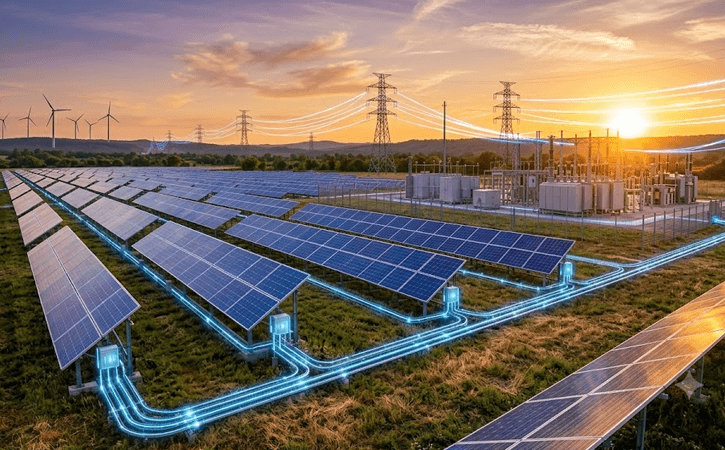
India curtailed nearly 1.8 billion units of renewable electricity during July and August 2026, even as the country faced power shortages and declining coal stocks amid record electricity demand. According to data from the Centre for Research on Energy and Clean Air (CREA), approximately 4.2% of India’s solar generation could not be absorbed by the power grid during the two-month period. The findings highlight the growing challenge of integrating renewable energy into the country’s electricity network.
The curtailment was attributed to transmission infrastructure limitations and grid operational constraints. Data reported on October 12, 2026, indicated that approximately 1,462 million units (MU) of solar power and 373 MU of wind power were curtailed during July and August. Meanwhile, India’s peak electricity demand reached around 270 GW in July, while nearly half of the country’s coal-fired power plants reportedly had coal stocks below four days of their requirements in early October. The situation underscores the mismatch between renewable energy generation, transmission capacity and electricity demand.
India’s renewable energy expansion has accelerated as the country works towards its target of 500 GW of non-fossil fuel-based installed power capacity by 2030. The country currently has approximately 304 GW of non-fossil capacity, while solar power accounts for around 168 GW of installed capacity. Government data also showed that 14% of solar power output was curtailed between April and June 2026, pointing to persistent grid integration challenges. Despite record renewable generation, coal continued to supply approximately two-thirds of India’s electricity during the September quarter, amid rising demand and reduced hydropower output.
The latest findings reinforce the importance of expanding transmission networks, improving grid flexibility and deploying energy storage solutions to make better use of available renewable electricity. Battery energy storage systems (BESS) can help store surplus solar generation for use during periods of higher demand, while improved forecasting and grid management can support more efficient power distribution. As India advances towards its clean energy goals, strengthening the infrastructure connecting renewable energy projects to consumers will be essential to reducing curtailment and improving energy security.
Resource: EnergyWorld
Click Here for more updates.

Add Happiness to Every StepPanelInverterDream
Search For Solar PanelsInvertersAccessoriesNewsAnything !
We have everything you require to make your solar project more efficient, reliable and profitable. So go ahead search for anything solar.


Leave A Comment