

Battery storage is becoming an increasingly important part of the global power system, particularly as renewable energy capacity continues to expand. In 2025, 108 GW of new battery storage capacity was deployed worldwide, around 40% more than in 2024, taking total installed capacity to eleven times its 2021 level, according to the IEA. Battery costs have also fallen substantially, with average battery costs declining by about 90% since 2010. For utility-scale projects, the median construction time is around 275 days, supporting the rapid deployment of storage where flexible power is needed.
A BESS stores electricity in battery cells and releases it on demand, coordinated by five subsystems: the cells that hold the energy, a Battery Management System (BMS) that protects them, a Power Conversion System (PCS) that converts DC to usable AC, thermal management that keeps cells at safe temperatures, and an Energy Management System (EMS) that decides when to charge or discharge. Understanding how a BESS works and how its individual components interact is therefore important when evaluating a system for a specific application.
The Five Core Components
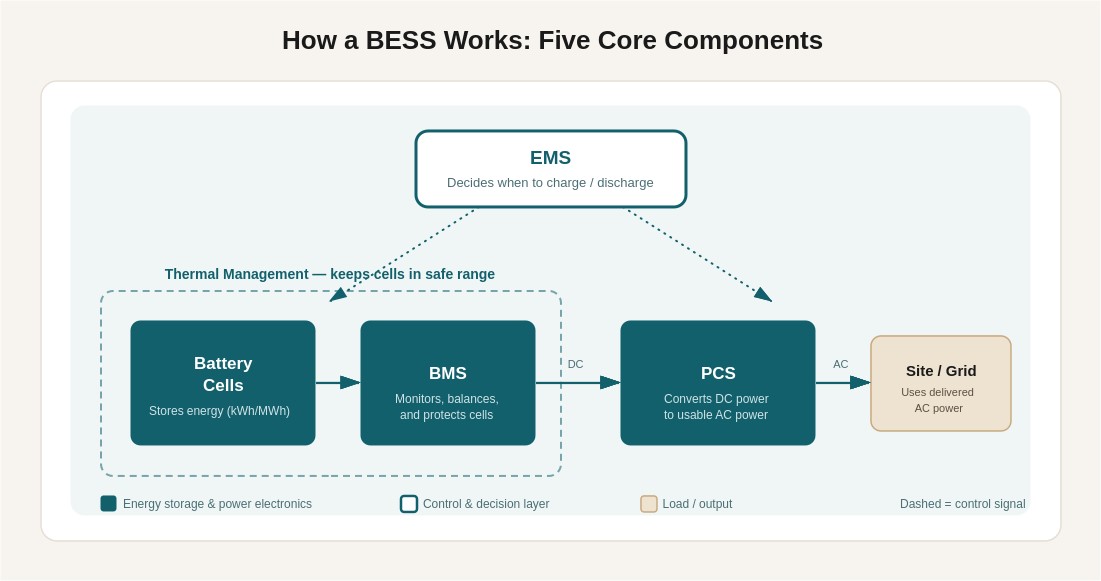
Figure 1: How power and control signals move through a BESS
- Battery cells & modules — individual cells are grouped into modules and racks that store energy. Capacity (kWh/MWh) is the “tank size”; power (kW/MW) is the “pipe size.” A system needs both specs read together, not just one, to know what it can actually do.
- BMS (Battery Management System) — monitors every cell for voltage, current, and temperature, balances charge across them, and cuts off charging or discharging before a fault develops. A 10,000+ cycle rating is only real if the BMS is actively protecting the pack on every single cycle, not just on paper.
- PCS (Power Conversion System) — converts stored DC power to usable AC power and back again, and manages the switch between grid-connected and backup (island) mode, often within milliseconds of a grid fault.
- Thermal management — air-cooled systems are simpler and lower-cost, suited to smaller commercial loads; liquid-cooled systems hold tighter temperature control and handle higher power density, which matters more as system size and cycling frequency increase.
- EMS (Energy Management System) — the decision layer. It reads live tariff data, site demand, and grid conditions, then decides exactly when to charge, hold, or discharge to capture the most value at that moment.
LFP vs. NMC: Choosing the Right Chemistry
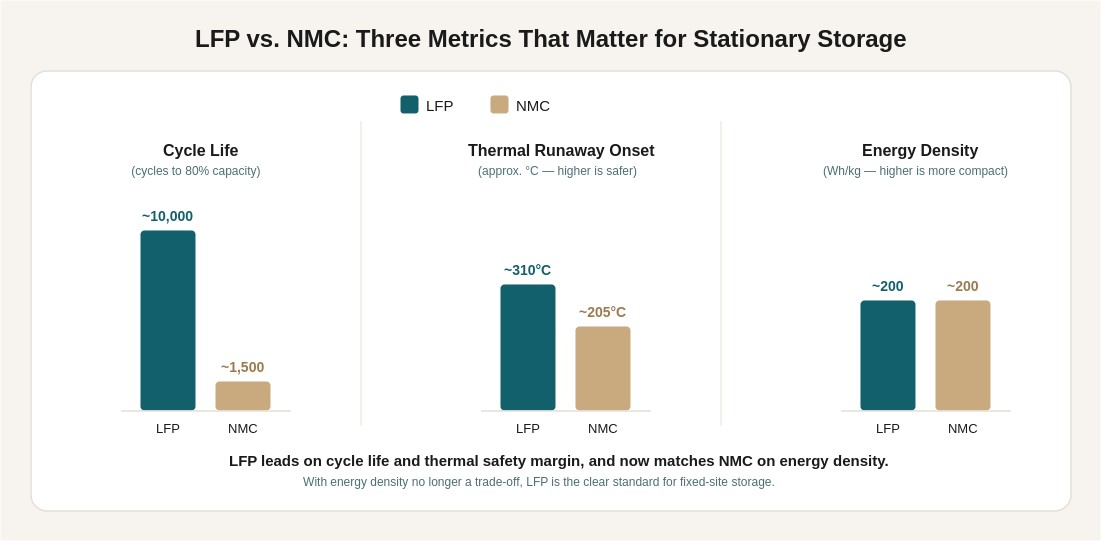
Figure 2: LFP leads on cycle life and thermal safety margin; NMC leads on energy density
| Metric | LPF | NMC |
|---|---|---|
| Cycle life | 10,000 cycles | 1,000–2,500 cycles |
| Thermal runaway onset | ~310°C (higher margin) | ~200–210°C |
| Energy density | 160-200 Wh/kg | 150–250 Wh/kg |
| Best fit | Stationary storage | Space-constrained (EVs) |
LFP now accounts for roughly 90% of global battery storage deployments, up from under 50% five years ago, because stationary systems don’t need NMC’s higher energy density but do benefit from LFP’s longer life and safety margin (IEA, 2026).
The Metrics That Actually Matter on a Spec Sheet
- C-rate — charge/discharge speed relative to capacity (1C = full discharge in one hour).
- Depth of Discharge (DoD) — how much capacity is used per cycle; deep, frequent DoD accelerates degradation.
- Round-Trip Efficiency (RTE) — energy out ÷ energy in. 100 kWh in, 88 kWh out = 88% RTE.
- Cycle life vs. calendar life — cycle count to 80% capacity, versus total usable years regardless of use.
- State of Health (SoH) — real-time capacity remaining vs. new; the number that reflects actual field performance.
How a Charge-Discharge Cycle Works
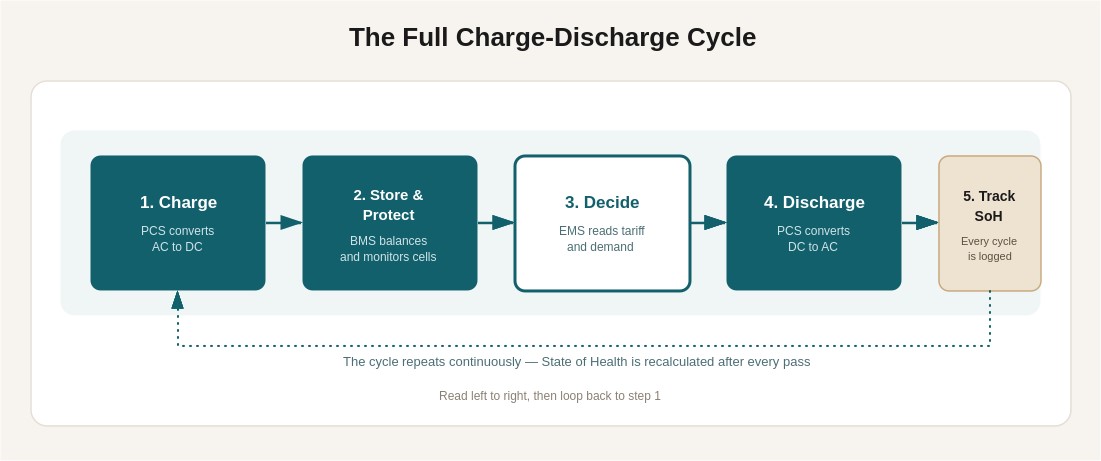
Figure 3: The five-step cycle repeats continuously, with SoH recalculated every pass
- Charge — PCS converts incoming AC to DC, typically during solar or off-peak hours.
- Store & protect — BMS balances and monitors every cell.
- Decide — EMS reads live tariff, demand, and grid data.
- Discharge — PCS converts DC back to AC for the site or grid.
- Track SoH — every cycle is logged and health is recalculated.
Where BESS Is Used
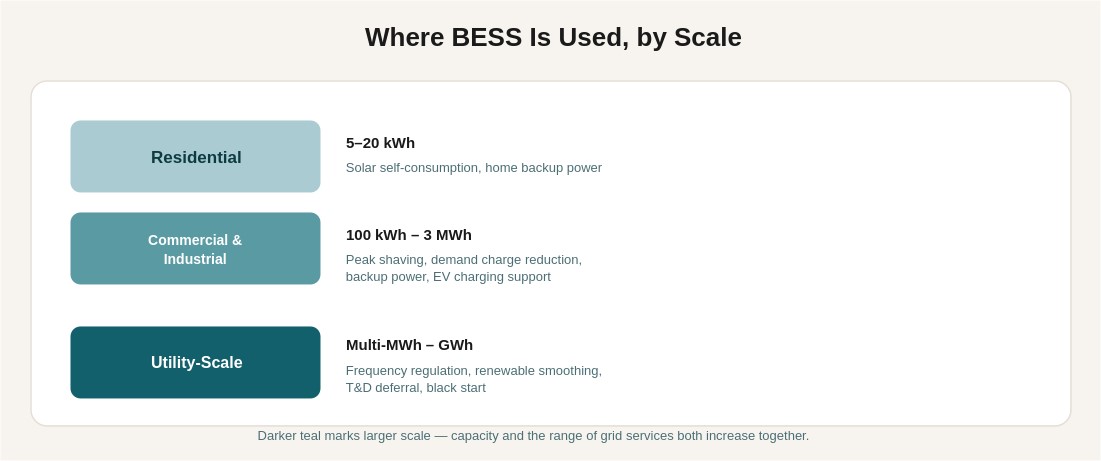
Figure 4: Scale determines both capacity and the range of services a system can provide
| Scale | Typical Capacity | Primary Use |
|---|---|---|
| Residential | 5–20 kWh | Solar self-consumption, home backup |
| Commercial & Industrial | 100 kWh–3 MWh | Peak shaving, demand charge reduction, backup, EV charging support |
| Utility-scale | Multi-MWh–GWh | Frequency regulation, renewable smoothing, T&D deferral, black start |
Built-In Safety
Safety is layered, not a single feature:
- Chemistry-level stability (LFP’s higher thermal runaway threshold)
- BMS-level fault detection and isolation
- Thermal management keeping cells inside a safe range
- Enclosure design that contains any fault
- Certification: IEC 62619 (cell safety), IEC 61000 (EMC), UL 9540A (fire propagation), UN 38.3 (transport)
How to Evaluate a BESS Before You Buy
A kWh number on a spec sheet tells you almost nothing about how a system will perform in year six. Before comparing quotes, check these instead:
- Ask what depth-of-discharge and temperature assumptions the cycle-life rating is based on — a number quoted under ideal lab conditions can look very different in a hot industrial environment.
- Confirm round-trip efficiency at the system level, not the cell level
- Match the thermal management approach to your actual duty cycle — a system cycling once a day has very different cooling needs than one cycling continuously under industrial load.
- Ask for real deployment data, not just datasheet claims — a manufacturer with systems already running in the field should be able to show you how they’ve actually performed over time, not only how they’re projected to.
A Real Deployment, Not a Simulation
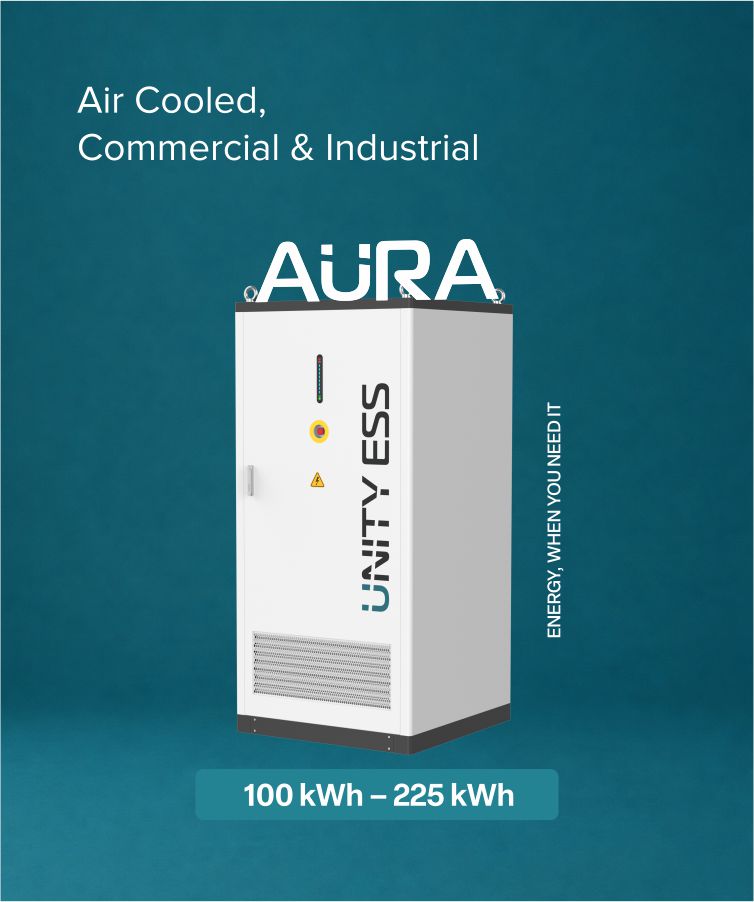
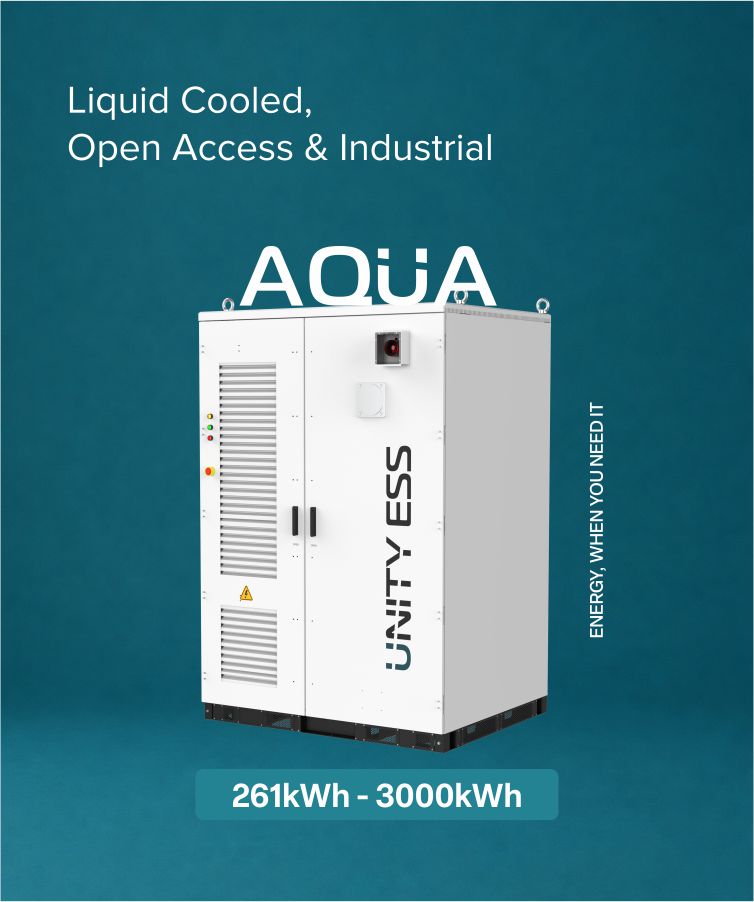
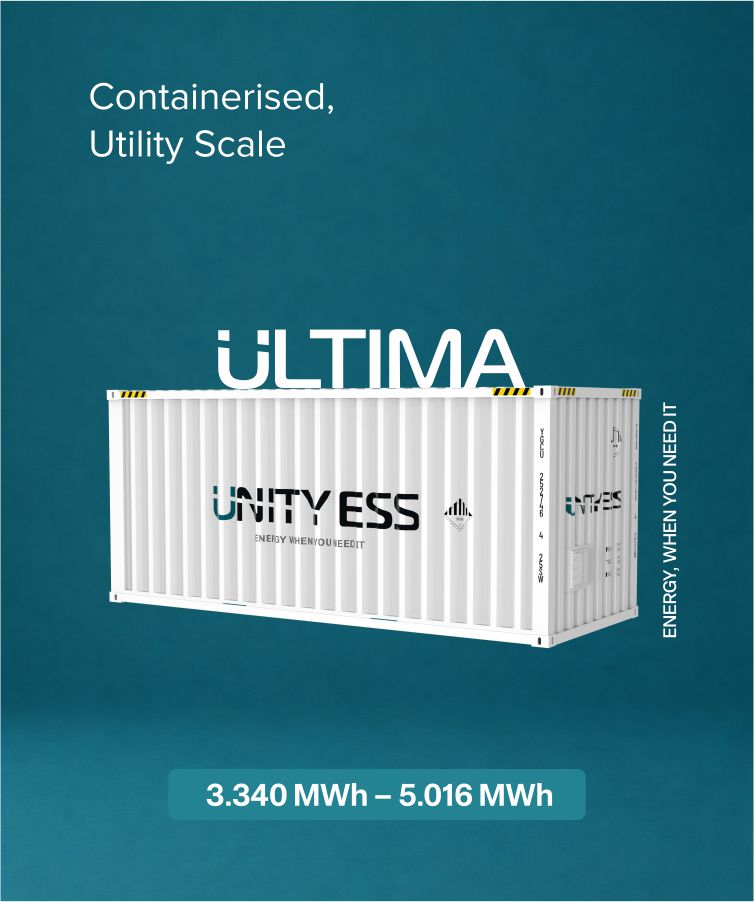
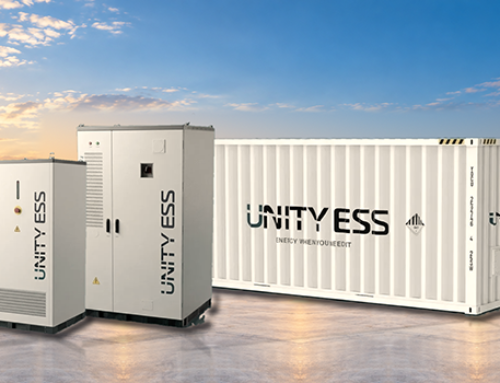
Every principle above is easier to trust once it’s been proven in the field rather than described on paper. Unity ESS’s deployment in Coimbatore, Tamil Nadu is one example: a 125 kW / 261 kWh BESS-integrated EV charging installation performing real peak shaving, load balancing, and dual-mode operation against live tariff conditions, not a modeled scenario. The same five components explained above (cells, BMS, PCS, thermal management, and EMS) are what make that deployment work every day, scaled differently across Unity Aura, Unity Aqua, and Unity Ultima depending on whether the site is commercial, industrial, or utility-scale.
Frequently Asked Questions
About Ornate Solar
Ornate Solar is a leading solar company with 10 years of experience in the industry and the mission to reimagine the way solar is installed worldwide.
By not only partnering with the best-in-class solar brands but also developing our high-quality solutions (panels, solar inverters, accessories, InRoof), we develop and deliver solutions that are modern, reliable, and effective.
Ornate Solar is also a trusted BESS manufacturer in India. We have developed UnityESS, an advanced energy storage solution to provide reliable power and energy independence.
If you are looking for high-quality solar solutions, call us at 1800 2026 252 to discuss your options.






Leave A Comment