

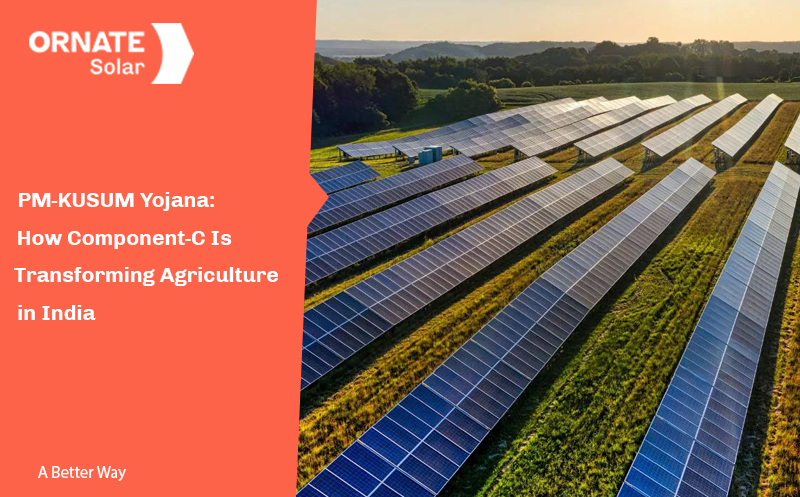
Indian farmers depend heavily on electricity for irrigation, yet many still face unreliable power supply, high diesel costs, and irregular irrigation schedules. To address these long-standing challenges, the Government of India launched the Pradhan Mantri Kisan Urja Suraksha evam Utthaan Mahabhiyan (PM-KUSUM)—a nationwide scheme aimed at bringing solar energy directly into agriculture.
Approved in 2019 and implemented by the Ministry of New and Renewable Energy (MNRE), PM-KUSUM yojana was designed to provide energy security to farmers, reduce dependence on diesel and subsidized grid electricity, and promote clean, decentralized power generation in rural India.
The government has extended the deadline for the PM Kusum Scheme till 30 September 2026, giving farmers and stakeholders more time to adopt solar-powered agricultural solutions and avail subsidies.
Why Was PM-KUSUM Started?
For years, farmers have relied on grid electricity supplied at odd hours or expensive diesel pumps to irrigate their fields. This not only increased farming costs but also placed a heavy subsidy burden on state governments and power distribution companies (DISCOMs).
PM-KUSUM Yojana was introduced to solve this problem by allowing farmers to use solar power for irrigation, ensuring daytime electricity, lowering fuel expenses, and reducing carbon emissions. At the same time, it helps states manage agricultural power demand more efficiently.
Understanding the PM-KUSUM Components
The scheme is divided into three parts.
Component-A focuses on decentralised solar power plants, and Component-B supports off-grid solar pumps. However, the real game-changer for large-scale agricultural power reform is Component-C, which focuses on solarizing existing grid-connected irrigation systems.
Component-C: Solarizing Grid-Connected Agricultural Pumps
Component-C aims to solarise 35 lakh grid-connected agricultural pumps across India. Instead of replacing existing infrastructure, this component upgrades it using solar power—making it practical, scalable, and cost-effective.
Component-C is further divided into two sub-components: C1 and C2, both designed to suit different ground realities.
Component C1: Individual Pump Solarisation
Under C1, a farmer’s existing grid-connected pump is solarised by installing solar panels near the pump site. During the day, the pump runs on solar power, while the grid remains available as a backup when needed.
For farmers, this means:
- Reliable daytime power for irrigation
- Reduced electricity bills
- Less dependence on uncertain grid schedules
- Better control over irrigation timing
In some cases, surplus solar power generated during non-irrigation hours can also be supplied back to the grid, helping reduce wastage.
Component C2: Feeder-Level Solarisation
Component-C2 works at a larger level. Instead of solarising individual pumps, an entire agricultural feeder is powered by a solar plant. All farmers connected to that feeder receive daytime solar electricity for irrigation.
This model is particularly effective in states with separate agricultural feeders.
For farmers, C2 ensures:
- Fixed daytime power supply
- No dependency on night-time electricity
- Improved voltage and power quality
For DISCOMs, it reduces losses and subsidy burden, making it one of the most preferred long-term solutions under PM-KUSUM.
How Successful Is PM-KUSUM So Far?
PM-KUSUM Yojana has seen strong adoption across several states, especially for solar pumps and grid-connected solarisation. While overall implementation is still progressing toward 2026 targets, Component-C is gaining momentum as states increasingly focus on feeder-level and pump-level solarisation due to its economic and operational advantages.
States with better feeder segregation and solar potential have already demonstrated improved power supply and farmer satisfaction under Component-C projects.
How Ornate Helps You Build Your PM-KUSUM Component-C Project
Ornate makes PM-KUSUM Component-C projects simple, reliable, and hassle-free. From bidding to commissioning and beyond, we take complete responsibility for your project.
We begin by assessing your existing grid-connected pump or agricultural feeder and help you select the most suitable option—C1 (Individual Pump Solarisation) or C2 (Feeder-Level Solarisation). Our team handles detailed design, approvals, and coordination with DISCOMs while strictly following all PM-KUSUM guidelines to ensure smooth and timely execution.
Ornate manages the entire project lifecycle, including engineering, procurement, installation, testing, and commissioning. We use trusted, high-performance equipment such as First Solar modules and Hopewind inverters to deliver stable daytime power and long-term system reliability.
We also support government subsidy facilitation and financing, making the investment easier and more accessible.
With Ornate as your trusted partner, everything is taken care of from bidding to project completion, allowing you to benefit from dependable solar power without complications.
Common FAQs
Conclusion
PM-KUSUM is more than a subsidy scheme—it is a structural reform in how agricultural power is delivered in India. Among its components, Component-C stands out as the most practical and scalable solution, improving irrigation reliability for farmers while strengthening the power sector.
With the right implementation partner, farmers can unlock the full benefits of solar-powered irrigation. Ornate Solar is committed to making PM-KUSUM Component-C accessible, efficient, and future-ready for Indian agriculture.
About Ornate Solar
Ornate Solar is a leading solar company with 10 years of experience in the industry and the mission to reimagine the way solar is installed worldwide.
By not only partnering with the best-in-class solar brands but also developing our high-quality solutions (panels, solar inverters, accessories, InRoof), we develop and deliver solutions that are modern, reliable, and effective.
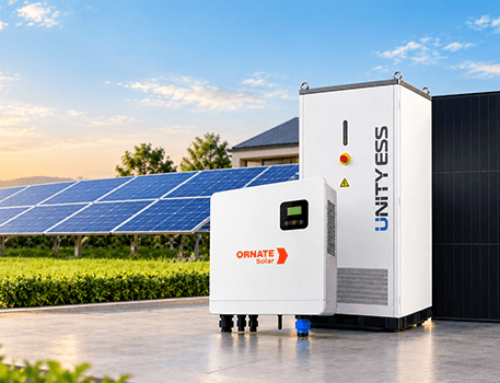
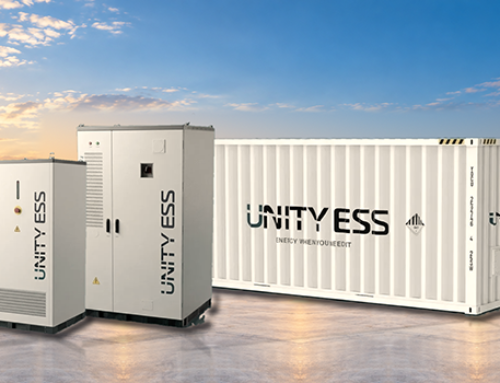
Ornate Solar is also a trusted BESS manufacturer in India. We have developed UnityESS, an advanced energy storage solution to provide reliable power and energy independence.
If you are looking for high-quality solar solutions, call us at 1800 2026 252 to discuss your options.





I am interested pm kusum
Hello Y Venkata, thank you for connecting with us. Kindly share your contact details, and our sales representative will help you better.
Also, you can get in touch with us @ 1800 2026 252