

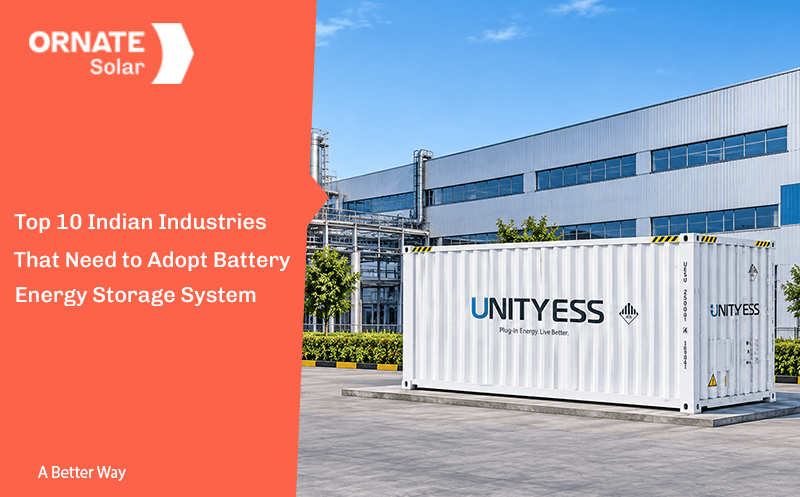
Industries adopt a battery energy storage system (BESS) to cut peak electricity costs, keep operations running through grid fluctuations, and store renewable power for when it’s needed most. India’s diesel generator market is still worth roughly USD 1.3 billion in 2026 because those outages remain common. This guide explores top 10 industries that can benefit most from adopting BESS in india, backed by real-world data, a comparison of diesel generators and battery energy storage system for industry, and suggest you which UnityESS system fits for your different energy needs
Why Indian industries need to adopt battery energy storage system (bess)
Diesel generators became the standard backup solution for Indian industries because grid reliability was a major concern. However, the energy landscape is changing. Stricter CPCB IV+ emission norms, rising diesel expenses, and declining battery storage costs are making traditional backup systems increasingly expensive to operate.
Modern lithium-ion Battery Energy Storage Systems (BESS) offer a more flexible alternative. They provide near-instant backup during power interruptions, help industries manage peak electricity demand, reduce dependence on diesel generators, and store excess solar energy for use when needed. With faster response times and the ability to support renewable energy integration, BESS is becoming an important part of industrial energy management.
Key Benefits of Adopting Battery Energy Storage Systems (BESS) in Industries
- Lower Operating Costs: Reduce diesel consumption, fuel transportation and generator maintenance by using stored grid or solar energy.
- Fast, Seamless Backup: Near-instant switchover helps minimise downtime and protects sensitive equipment during power interruptions.
- Peak Demand Management: Discharge stored energy during peak tariff periods to reduce electricity bills and manage demand charges.
- Lower Emissions and Noise: Reduce diesel generator usage, local emissions and noise pollution, supporting sustainability goals.
- Better Solar Energy Utilisation: Store excess solar power and use it when generation is low or electricity demand is high.
- Improved Energy Reliability: Maintain critical operations during grid fluctuations and unexpected power outages.
- Simplified Environmental Compliance: Reduce dependence on diesel gensets and associated emission and noise management requirement
Top 10 industries in India that need battery energy storage system
Battery Energy Storage Systems are becoming increasingly relevant across India’s industrial and commercial sectors. From telecom towers and data centres to manufacturing plants and hospitals, businesses need reliable electricity to maintain operations, control energy costs and reduce dependence on diesel generators.
Here are 10 Indian industries where BESS can play an important role in improving energy reliability, reducing operating expenses and supporting the transition towards cleaner energy.
1. Telecom Towers
Industry Overview: India’s telecom infrastructure comprises hundreds of thousands of towers that require continuous electricity to maintain uninterrupted voice and data connectivity.
Energy Challenge: Telecom towers in remote and rural areas often face limited grid access or unreliable electricity supply. Diesel generators remain an important backup source, increasing operating costs and emissions.
How BESS Helps: Battery energy storage system can provide backup during grid interruptions, work alongside rooftop solar and reduce diesel generator runtime. This helps telecom operators improve network reliability while managing energy expenses.
2. Data Centres and IT/ITES
Industry Overview: India’s operational data centre capacity reached approximately 1.8 GW in H1 2026. Electricity demand is expected to grow significantly by 2030, driven by cloud computing, digital services and AI workloads.
Energy Challenge: Data centres operate around the clock and require uninterrupted power for servers, cooling systems and networking infrastructure. Even a brief power interruption can affect operations, making reliable backup essential.
How BESS Helps: BESS can support backup power architecture, complement UPS systems and generators, and help manage peak electricity demand. It can also store renewable energy for use during periods of low solar generation.
3. Manufacturing and MSMEs
Industry Overview: India’s industrial sector accounted for approximately 42% of total electricity consumption in FY 2023–24, making manufacturing one of the largest potential markets for commercial and industrial energy storage.
Energy Challenge: Manufacturing facilities operate energy-intensive machinery, motors, compressors and production lines. Grid interruptions can disrupt production schedules, while peak electricity demand can increase monthly power bills.
How BESS Helps: Battery storage system can discharge during peak-demand periods, reduce demand charges where tariff structures allow, and provide backup during grid interruptions. It can also store excess rooftop solar generation for use during evening production shifts.
4. Textile and Garment Industry
Industry Overview: India’s textile and apparel industry contributes approximately 2.3% to GDP and employs over 45 million people directly, making it an important part of the country’s manufacturing ecosystem.
Energy Challenge: Textile manufacturing involves energy-intensive processes such as spinning, weaving, dyeing, processing and finishing. Electricity interruptions can disrupt machinery, affect production schedules and create material losses.
How BESS Helps: BESS can support continuous production, reduce dependence on diesel generators and help textile units utilise stored solar energy during periods of high electricity demand. It can also help manage peak loads in facilities with multiple production shifts.
5. Cement Industry
Industry Overview: Cement manufacturing is an energy-intensive industry involving crushers, grinding mills, conveyors, kilns and material-handling equipment. These processes require substantial and consistent electricity.
Energy Challenge: High electricity consumption, demand charges and dependence on captive power or diesel backup can increase operating expenses. Power interruptions can also disrupt production processes and material movement.
How BESS Helps: Battery storage can help cement plants manage peak electricity demand, support critical auxiliary loads and optimise renewable energy consumption. It can also complement existing captive power infrastructure and reduce diesel generator usage.
6. Hospitality and Hotels
Industry Overview: Hotels and resorts depend on electricity throughout the day to operate lighting, air conditioning, elevators, kitchens, security systems and guest facilities.
Energy Challenge: Power interruptions can affect guest comfort, disrupt hotel services and impact the overall customer experience. Diesel generators provide backup but involve fuel, maintenance, noise and emissions.
How BESS Helps: BESS can provide rapid backup for essential hotel operations, reduce diesel generator runtime and store excess solar energy for evening consumption. This helps hospitality businesses improve energy reliability without compromising guest experience.
7. Healthcare and Hospitals
Industry Overview: Hospitals require reliable electricity to operate critical medical equipment, intensive care units, operating theatres, diagnostic systems and life-support infrastructure.
Energy Challenge: Even short power interruptions can disrupt critical medical operations. Hospitals therefore require dependable backup systems that can respond quickly and maintain power to essential loads.
How BESS Helps: BESS can support critical backup infrastructure by providing rapid power response and bridging the transition between grid failure and generator operation. When integrated with appropriately designed UPS systems, it can improve power continuity for essential medical equipment.
8. Pharmaceutical Industry
Industry Overview: Pharmaceutical manufacturing involves highly controlled production environments, including laboratories, cleanrooms, formulation units and temperature-sensitive storage facilities.
Energy Challenge: Power interruptions can affect temperature-controlled environments, sensitive manufacturing equipment and production processes. In certain operations, even a brief interruption can result in product quality concerns or batch losses.
How BESS Helps: Battery storage can support uninterrupted operation of critical equipment, maintain essential environmental controls and reduce dependence on diesel backup. It can also help pharmaceutical manufacturers integrate renewable energy into their electricity supply.
9. Cold Storage and Food Processing
Industry Overview: India has 8,831 cold storage facilities with a combined capacity of approximately 402.87 lakh metric tonnes, according to government data from February 2026.
Energy Challenge: Cold storage facilities depend on continuous refrigeration to maintain specific temperature conditions. Power interruptions can affect refrigeration systems, increase spoilage risks and result in inventory losses.
How BESS Helps: BESS can provide backup power to refrigeration systems, support temperature stability during grid interruptions and store solar energy for use during high-demand periods. This can help reduce diesel consumption and improve operational reliability.
10. Retail and Shopping Malls
Industry Overview: Shopping malls, supermarkets and retail complexes operate multiple electricity-dependent systems, including lighting, escalators, elevators, HVAC, security and billing infrastructure.
Energy Challenge: Power interruptions can disrupt customer transactions, affect store operations and reduce visitor comfort. At the same time, high cooling and lighting requirements contribute to substantial electricity expenses.
How BESS Helps: Battery storage can support essential operations during outages, reduce peak-demand charges and store excess solar energy for later use. This allows retail businesses to improve energy management while maintaining a consistent customer experience.
BESS vs diesel generator: cost and performance comparison
Diesel generators have traditionally been the preferred backup power solution for Indian industries. However, rising fuel costs, regular maintenance requirements and emission concerns are encouraging businesses to explore Battery Energy Storage Systems (BESS) as an alternative.
Unlike diesel generators, BESS stores electricity from the grid or renewable energy sources and supplies it when required. It can also help businesses manage peak electricity demand, reduce diesel consumption and improve power reliability.
Here’s how UnityESS BESS compares with diesel generators.
| Metric | Diesel generator | UnityESS BESS |
|---|---|---|
| Cost per unit | ₹25-30/kWh, and rising with every fuel-price hike | A fraction of that — charged from grid or solar, no per-run fuel cost |
| Switchover time | 30 seconds to 3 minutes for the generator to start and stabilise before it can carry load | ≤10 ms |
| Noise and emissions | Loud, diesel exhaust, CPCB IV+ compliance burden | Silent, zero on-site emissions |
| What it needs to run | Diesel storage, routine oil and filter changes, fuel logistics | A charge from the grid, your own solar, or both |
| Cycle life | No fixed cycle life; wear compounds with every run hour | 10,000+ cycles, under STC |
Which UnityESS BESS fits which industry
Every industry has different energy requirements, operating loads and backup needs. UnityESS offers scalable Battery Energy Storage Systems designed to support industrial and commercial applications.
With modular configurations, advanced battery management, liquid and air-cooling options, and integrated PCS solutions, UnityESS helps businesses optimize energy consumption, improve power reliability and make better use of renewable energy.
Explore UnityESS Battery Energy Storage Solutions for your business.
| Product | Capacity | Best for |
|---|---|---|
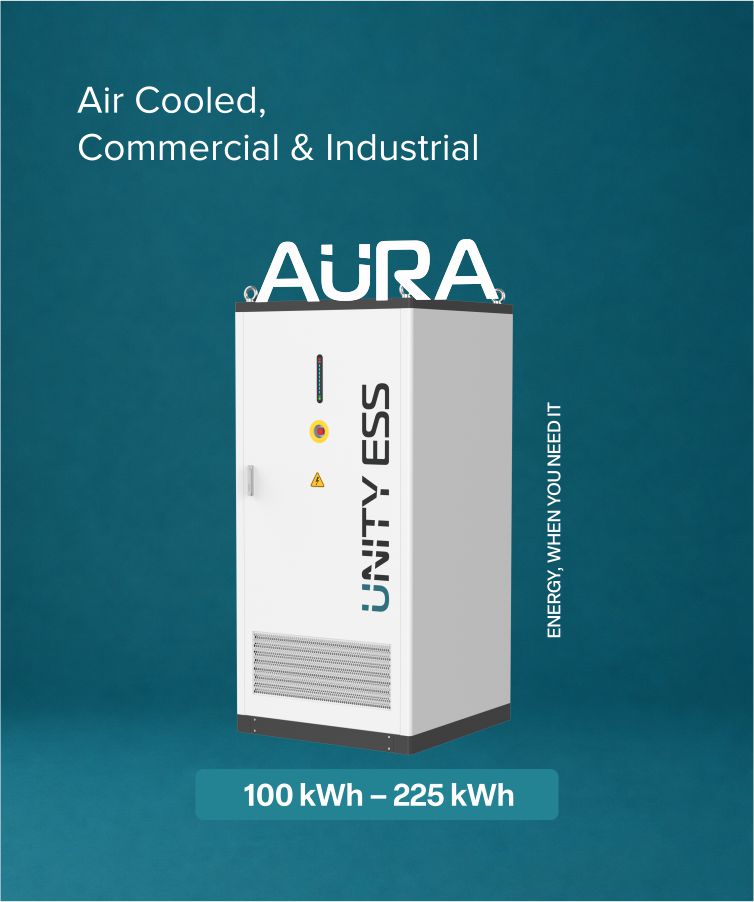
| Aura | 100-260 kWh | Hotels, retail stores, small manufacturing units, a single tower or branch site |
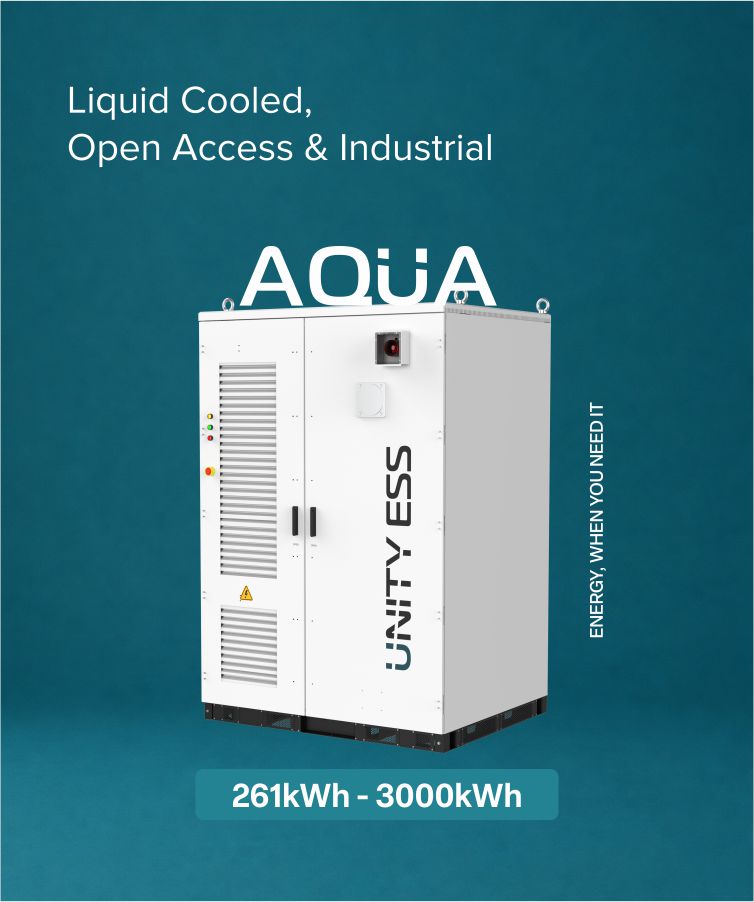
| Aqua | 269 kWh-3 MWh | Textile mills, hospitals, food processing and cold storage, mid-size data centres |
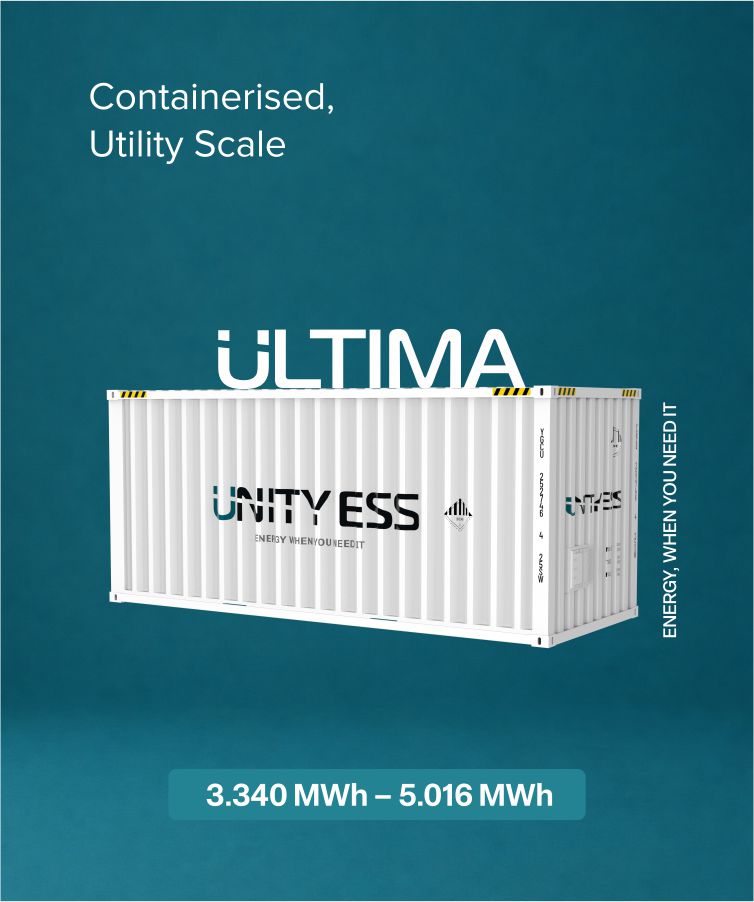
| Ultima | 3-6.25 MWh | Cement plants, large manufacturing campuses, hyperscale data centres, telecom tower-cluster hub sites |
Practical considerations before adopting BESS
- Sizing and economics: match power (kW) and energy capacity (kWh) to the facility’s load profile; payback typically runs 2-4 years.
- Site and tariff fit: factor in time-of-day tariffs and roof space for solar pairing, and whether the load needs air-cooled (Aura) or liquid-cooled (Aqua/Ultima) capacity.
Common FAQs
Energy, when your industry needs it
About Ornate Solar
Ornate Solar is a leading solar company with 10 years of experience in the industry and a mission to reimagine the way solar is installed worldwide.
By not only partnering with the best-in-class solar brands but also developing our high-quality solutions (solar inverters, InRoof), we develop and deliver solutions that are modern, reliable, and effective. Ornate Solar is the official partner of Hopewind in India.
Ornate Solar is also a trusted BESS manufacturer in India. We have developed UnityESS, an advanced battery energy storage solution (bess) to provide reliable power and energy independence.
If you are planning a 1 MW solar plant, call us at 1800 2026 252 to discuss your options.



Leave A Comment