


Gujarat is India’s fifth-largest state by area and ninth-most populous, with a population of more than 60 million people. It is one of India’s leading industrial states and a leader in the country’s energy sector.
With 34,879.88 MW of installed solar capacity as of 31 August 2026 (MNRE), Gujarat is India’s second-largest solar state and has more rooftop solar than any other state. Gujarat is also home to Modhera, which the Government of India declared the country’s first 24×7 solar-powered village in October 2022.
In this blog, we’ll explore Gujarat’s solar potential, subsidies and policy framework, and what makes the state a leader in clean energy.
Key takeaways (updated 1 October 2026)
- Gujarat homeowners can get up to ₹78,000 under the central PM Surya Ghar: Muft Bijli Yojana.
- The currently approved scheme period runs until 31 March 2027.
- A 3 kW on-grid rooftop system typically costs about ₹1.6–1.8 lakh before subsidy, or about ₹1.2–₹1.3 lakh after subsidy (indicative 2026 market range).
- The residential subsidy is not available for ordinary industrial and commercial connections.
- Gujarat has 8,146.70 MW of rooftop solar, about 25% of India’s total (MNRE, 31 August 2026).
Solar Subsidy in Gujarat
Residential consumers installing grid-connected rooftop solar systems can avail Central Financial Assistance (CFA) under the PM Surya Ghar: Muft Bijli Yojana through the national portal, pmsuryaghar.gov.in. The subsidy details are as follows:
The subsidy is capped at ₹78,000, so a 5 kW or 10 kW home system gets the same amount as a 3 kW system. To be eligible, the system must use DCR (Domestic Content Requirement) solar modules, be installed by a registered vendor, and be connected to the grid with a net meter. The subsidy is credited to the consumer’s bank account after the DISCOM inspects and commissions the system.
Gujarat’s earlier SURYA Gujarat rooftop programme is no longer the route for residential subsidy. No current, universally applicable Gujarat state top-up was identified in the official material checked for this update, so if a vendor quotes an extra “state subsidy”, ask for the government notification.
Last date for solar subsidy in Gujarat
The currently approved implementation period for PM Surya Ghar runs until 31 March 2027. No official extension has been notified. Since feasibility approval, installation, net metering, and DISCOM inspection all take time, it is better to apply well before the deadline.
3 kW solar system price in Gujarat with subsidy
A 3 kW on-grid rooftop solar system in Gujarat typically costs about ₹1.6 lakh to ₹1.8 lakh before subsidy. After the ₹78,000 subsidy, the net cost works out to about ₹1.21 to ₹1.32 lakh.
These figures are an indicative range based on 2026 price lists published by rooftop solar installers in Gujarat, not a government-fixed price. The final cost depends on module and inverter choice, mounting structure height, roof type, and warranty terms. Note that you pay the full system price first, then the subsidy is credited after commissioning.
Housing societies and RWAs can also install rooftop solar for common facilities. Read our guide on solar for housing societies for details.
Gujarat has excellent natural conditions for solar power generation. The state receives high solar irradiation throughout the year, making it ideal for both solar roof and utility-scale solar projects.
Several factors contribute to Gujarat’s strong solar growth:
- High solar radiation across most regions
- Large areas of land suitable for solar parks
- Supportive renewable energy policies
- Strong industrial demand for electricity
The state also leads the country in rooftop solar installations under the PM Surya Ghar Muft Bijli Yojana, the Government of India’s flagship program for promoting residential solar systems.

Residential consumers in Gujarat can benefit from subsidies provided under the national rooftop solar program. These subsidies are available for grid-connected rooftop solar installations.
Consumers can apply for the subsidy through the National Portal for Rooftop Solar.
Residential Rooftop Subsidy Structure
The subsidy provided under the program is structured as follows:
| System Capacity | Subsidy Amount |
|---|---|
| Up to 2 kW | ₹30,000 per kW |
| 2–3 kW | ₹30,000 per kW for first 2 kW + ₹18,000 per kW for the third kW |
| Above 3 kW | Maximum subsidy capped at ₹78,000 |
Homeowners can install solar panels on rooftops, terraces, balconies, or through building-integrated photovoltaic (BIPV) systems.
These installations help reduce electricity bills while contributing to clean energy generation.

Solar Subsidy for Farmers in Gujarat
In 2018, the Gujarat government launched the Suryashakti Kisan Yojana (SKY) as a pilot scheme that allowed farmers to set up solar panels on their farms, use the power for irrigation, and export the surplus energy back into the grid.
Under the scheme, the central and state governments provided a 60% subsidy on the project cost. 35% of the cost was provided as a loan at 4.5–6% interest, and the remaining 5% was borne by the farmers. Farmers were paid ₹7/unit for surplus power for the first 7 years and ₹3.5/unit for the remaining 18 years.
Today, the main national route for farmers is PM-KUSUM, which supports small grid-connected solar plants on barren or fallow land (Component A), standalone solar pumps (Component B), and solarisation of existing grid-connected pumps (Component C). Availability depends on the current Gujarat application window, so check the latest GEDA or DISCOM notice before applying.
Farmers in Gujarat can also benefit from solar energy programs designed to improve income and reduce dependence on conventional electricity.
One such initiative is the Suryashakti Kisan Yojana.
Gujarat launched the Suryashakti Kisan Yojana (SKY) in June 2018 as a pilot scheme. It let farmers with grid-connected pumps use solar power for irrigation and sell surplus electricity to the DISCOM.
Farmers paid only 5% of the project cost upfront. The central and state governments supported 60% of the cost, and the remaining 35% was a low-interest loan repayable over seven years. Surplus power earned ₹7 per unit for the first seven years and ₹3.5 per unit for the next 18 years.
Current Financial Structure of the SKY Scheme
| Component | Contribution |
|---|---|
| Government subsidy | 60% (30% central + 30% state) |
| Loan facilitated by the state | 35% |
| Farmer contribution | 5% upfront |
This program helps farmers reduce irrigation electricity costs while generating additional income from surplus power sales.
Key benefits of the scheme include:
- 60% subsidy on project cost
- 30% loan support from financial institutions
- 10% contribution from farmers
Solar subsidy for Farmers can also generate additional income by exporting surplus electricity generated by their solar systems
Gujarat’s Solar Energy Growth
Gujarat is a semi-arid region that receives vast amounts of sunshine, and the state government is making strides to harness this geographical advantage.
As of 31 August 2026, Gujarat’s installed solar capacity stood at 34,879.88 MW, according to MNRE:
Gujarat is second only to Rajasthan in total solar capacity, and its 8,146.70 MW of rooftop solar is the highest of any state, about a quarter of India’s 32,595.64 MW. With 53,834.78 MW of total renewable energy capacity, Gujarat also has the highest overall renewable capacity in India.
Gujarat also leads the PM Surya Ghar scheme. As of 5 August 2026, the state had recorded 7,80,553 rooftop solar installations with a capacity of 2,924.99 MW under the scheme, the highest of any state (MNRE data).
The state is also solarising its own buildings. For FY 2024-25, Gujarat set a target of 48 MW of rooftop solar on government buildings, with a budget of about ₹177 crore.
Gujarat Integrated Renewable Energy Policy 2025
In December 2025, the Government of Gujarat introduced the Gujarat Integrated Renewable Energy Policy 2025, replacing the earlier Renewable Energy Policy 2023. The new policy provides a unified framework for renewable energy development in the state and will remain in effect until 31 December 2030.
The policy aims to accelerate Gujarat’s clean energy transition and attract large-scale investment in renewable technologies.
Key highlights of the policy
- Target of over 100 GW renewable energy capacity by 2030
- Long-term vision to reach 150 GW by 2035 and 300 GW by 2047
- Integration of solar, wind, hybrid projects, battery energy storage systems (BESS), floating solar, and agri-PV technologies
- Incentives available for up to 25 years after project commissioning
This policy strengthens Gujarat’s position as one of India’s leading renewable energy markets and supports rapid expansion of solar power across residential, commercial, and industrial sectors.
Gujarat Renewable Energy Policy 2023
The Renewable Energy Policy 2023 aims to accelerate renewable energy development in Gujarat and attract large investments in the sector.
Key targets of the policy include:
- achieving 100 GW of renewable energy capacity by 2030
- attracting ₹5 lakh crore in investment
- developing large renewable energy parks across the state
One of the most ambitious initiatives is the hybrid renewable energy park being developed in the Kutch region, which will combine solar and wind power generation.
What’s Fuelling the Rise of Solar in Gujarat?
The boom in rooftop solar installations in Gujarat can be traced back to the favourable policies introduced by the state.
In 2019, the Gujarat government introduced the SURYA Gujarat rooftop scheme, which built a large network of installers and a streamlined DISCOM process. PM Surya Ghar has since accelerated this growth.
In October 2023, the state introduced its Renewable Energy Policy 2023, which will remain in effect until 30 September 2028 or until a new policy is notified. The policy aims to facilitate 100 GW of renewable energy capacity by 2030, attract investments of about ₹5 lakh crore and utilise approximately 4,00,000 acres of land.
Gujarat also offers net metering for rooftop solar systems with a capacity of up to 1 MW.
Gujarat is also building the world’s largest renewable energy park at Khavda in Kutch, with a planned capacity of 30,000 MW from a mix of solar and wind energy.
Solar Opportunities for Businesses in Gujarat
In recent years, many established organisations have invested in Gujarat’s renewable energy sector.
- In 2021, Reliance Industries Limited (RIL) announced the 5,000-acre Dhirubhai Ambani Green Energy Giga Complex in Jamnagar, with four giga-factories for solar photovoltaic modules, energy storage batteries, fuel cells and electrolysers.
- Adani Solar manufactures solar cells and modules at its facility in Mundra, Gujarat.
- Waaree Energies inaugurated its 5.4 GW solar cell manufacturing facility at Chikhli, Gujarat, in March 2025.
- SJVN, a state-owned utility, commissioned its 100 MW Raghanesda Solar Power Station in Gujarat in February 2024.
A favourable solar policy is essential for companies to realise the benefits of solar investment, and Gujarat has one. The PM Surya Ghar subsidy is for residential consumers and is not available for ordinary industrial and commercial connections. However, businesses can reduce their power costs through captive or third-party open access solar, net metering where eligible, and tax benefits such as accelerated depreciation on solar assets (check the current rate with your tax adviser).
Read more about solar for factories and warehouses.
Major Renewable Energy Investments in Gujarat
Several major companies are investing in renewable energy projects in Gujarat, further strengthening the state’s clean energy ecosystem.
Examples include:
- Reliance Industries investing heavily in renewable energy manufacturing
- Adani Solar expanding solar manufacturing capacity
- Waaree Energies operating one of India’s largest solar manufacturing facilities
These investments are helping Gujarat become a major renewable energy hub.
FAQs
How Can We Help?
Ornate Solar is India’s leading solar company with 10 years of experience. By partnering with the best-in-class global solar brands, we bring the most reputed solar panels, solar inverters, and solar accessories to you and make your shift to solar cost-effective and easy.
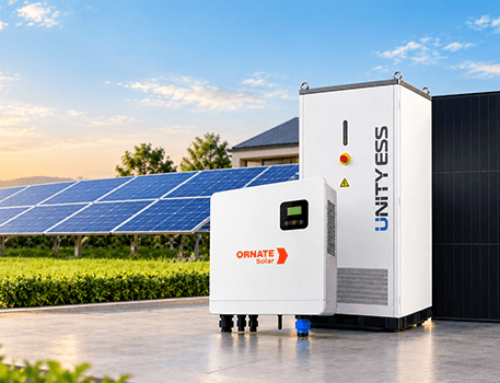
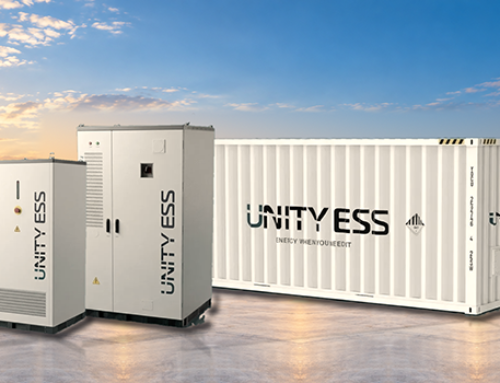
We are also a trusted BESS manufacturer company in India. We have developed UnityESS, an advanced energy storage solution to provide reliable power and energy independence.
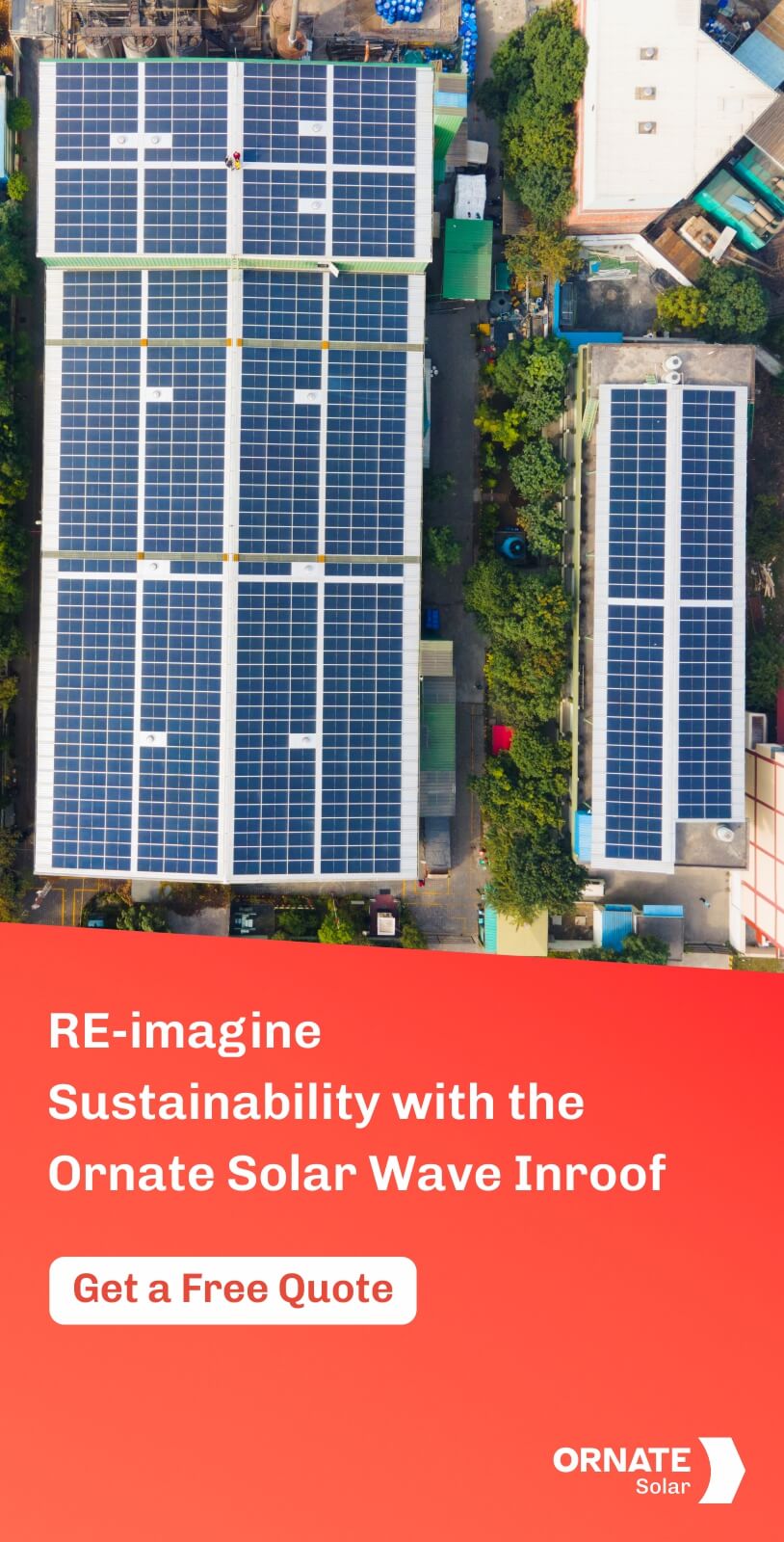
We have also developed India’s first Integrated InRoof system, which turns solar panels into a solar roof and eliminates the need for sheet roofing.
We deliver across India.
For more information, please give us a call at 1800 2026 252.









Amazing insights on Gujarat’s solar growth and policy impact — truly inspiring for renewable energy advocates and sustainability enthusiasts!
I want to install 1000 KW Solar system in my open land. Can i have a costing of Project?
Also how much subsidy given by the Government?
and At what cost DGVCL buy electricity from us?
Hello Chirag, thank you for connecting with us. Kindly share your contact details, and our sales representative will help you better.
Also, you can get in touch with us @ 1800 2026 252
hi i am form morbi gujarat. need help for make a solar farm for sale of electricity to my company. minimum 3mw plant
Hello Jay, thank you for connecting with us. Kindly share your contact details, and our sales representative will help you better.
Also, you can get in touch with us @ 1800 2026 252
I had subsidy benefit in my old home before 5 yrs for 4 kv solar. Now I m shifted to new home different adress with different consumer no. Electric metre and install 6 kv.
Am I eligible for subsidy for my new home?
I had already applied for solar rooftop on my home but in my region Madhyagujrat vij company ,Gujarat
tolled me to pay Transformer charges Rs.155000 to pay as estimate cost how to it is possible like Middle class
to pay this much huge amount against subsidy amount is only Rs 78000 my work had been stopped by my contractor
only for this reason kindly guide us for removal our problem
FOR NEW POLICY OF INDUSTRIAL SOLAR PARK ANY DOCUMENTS ,POLICY MANUAL AVAIALBLE ?
How can we put solar park in our land??
Hello Vaibhav, thank you for connecting with us. Kindly share your contact details, and our sales representative will help you better.
Also, you can get in touch with us @ 011-4353 6666
Hi My name is Dharmesh R Das and I am intrested on doing a solar farming on my farm land . Please share some information for such project.
Hello Dharmesh, thank you for connecting with us. Kindly share your contact details, and our sales representative will help you better.
Also, you can get in touch with us @ 011 4353 6666
Our land is 1km away from GEB..lilesera, Godhra..Can we install ground solar plant in our land..how we can earn money from the project n how much…what would be project cost…
Hello Dr. Sarvar, thank you for connecting with us. Kindly share your contact details, and our sales representative will help you better.
Also, you can get in touch with us @ 011-4353 6666
I need solar system for tube well in my farm is it possible for irrigation purpose and how much cost with solar pump government subsidy is available can you guide me where to contact and any permission required from Mgvcl??
Hello Ramesh, thank you for connecting with us. Kindly share your contact details, and our sales representative will help you better.
Also, you can get in touch with us @ 011 4353 6666
Is solar energy subsidies by government on residential property? If yes what is the figure please .
You can find all the subsidy details/figures here, please visit https://ornatesolar.com/news/india-raises-subsidy-for-residential-rooftop-solar-installations
હાલમાં સૌર સબસિડી માત્ર રહેણાંક સોલાર ઇન્સ્ટોલેશન માટે જ ઉપલબ્ધ છે
VERY GOOD INFORMATIVE DETAILS. PLEASE LET US KNOW INTEREST SUBSIDY AND CASH SUBSIDY AVAILABE TO INDUSTRY FOR PUTTING SOLAR ROOF TOP AND SOLAR GROUND MOUNTED.
Hi Mr. Kotadia,
Currently solar subsidy is only available for residential solar installations. However, industries can avail up to 40% accelerated depreciation benefit for their solar asset.
If you are exploring solar solutions for your business, you can get in touch with us at @ 011-4353 6666
Given that Gujarat is mostly arid, solar power is an industry that is rapidly growing there. In India, it was one of the first states to develop solar generation capacity. Thank you sharing this blog with us!