

Gujarat has more renewable energy than almost any other Indian state, and it is now building the rules to store it. In October 2026, the state’s electricity regulator notified dedicated battery storage regulations. A draft battery energy storage system (BESS) Policy from the Energy and Petrochemicals Department, dated two weeks later, would make storage mandatory for most new utility-scale solar and wind projects.
This guide explains how BESS in Gujarat is evolving: why the state needs battery storage, what the Gujarat BESS policy framework says, which incentives are on offer, and what it means for businesses and developers. For the solar side of the story, see our guide to solar in Gujarat: potential, policy and subsidy.
Key takeaways (updated 12 November 2026)
- Gujarat had 51 GW of installed renewable capacity as of September 2026, including about 36.23 GW of solar and 17.04 GW of wind (draft BESS Policy 2026).
- The draft policy targets more than 28 GWh of battery energy storage system by FY 2029–30 and more than 100 GWh by FY 2035–36.
- New ground-mounted solar projects of 5 MW and above would need co-located BESS of at least 25% of AC capacity: 2 hours of storage for projects commissioned by 30 June 2029, 4 hours for projects commissioned later.
- The mandate covers DISCOM-procured projects and new open access, captive and merchant PM-KUSUM and other government-scheme projects are exempt from the DISCOM-tied mandate.
- Proposed incentives include, for projects covered by the policy, a 5-year electricity duty exemption, a 5-year transmission charge exemption for BESS integrated with renewable energy (RE) projects, and exemption from Gujarat Pollution Control Board (GPCB) consents.
- The policy is a draft. Final provisions may change when it is notified.
Why Gujarat needs battery energy storage system
Gujarat’s challenge is no longer generating clean power, it is using it when it is needed. Solar produces most of its energy around midday, while demand stays high into the evening and night.
According to the draft BESS Policy 2026, Gujarat had 55.51 GW of installed renewable energy capacity as of September 2026, including about 36.23 GW of solar PV (8.53 GW of it rooftop) and 17.04 GW of wind.
The draft names the problems this creates as intermittency, intra-day balancing, peak demand, grid stability, transmission constraints and resource adequacy. Battery storage solution helps with each of these:
- Shifting solar to the evening: storing midday solar and supplying it after sunset.
- Reducing curtailment: absorbing solar that would otherwise be wasted when the grid cannot take it.
- Peak shaving: meeting short peaks without fossil-fuel peaking plants.
- Grid services: frequency regulation, voltage support and reserves, which batteries can provide within seconds.
- Easing transmission congestion: storing power near where it is generated instead of building new lines immediately.
For businesses, the same functions translate into lower peak demand charges, better use of captive solar and more reliable supply, as we explain in how battery storage improves ROI for open access users. That is why the state’s draft policy proposes treating storage as part of every large renewable project rather than an optional add-on. The need is national too: see our coverage of India’s projected energy storage requirement.
BESS in Gujarat: Targets and Project Pipeline
The draft BESS Policy 2026 sets two state targets: more than 28 GWh of operational battery storage by FY 2029–30, and more than 100 GWh by FY 2035–36.
Gujarat is already one of India’s most active buyers of grid-scale storage. Gujarat Urja Vikas Nigam Ltd (GUVNL) procures standalone BESS through competitive bidding, and pays developers a fixed monthly charge per MW of storage capacity under a Battery Energy Storage Purchase Agreement (BESPA). Recent rounds, as reported in the trade press:
| GERC tariff approval | Round and capacity | Tariff (₹/MW/month) | Notes | Source |
|---|---|---|---|---|
| Oct 2026 | Phase IX: 450 MW / 900 MWh | 2,31,989 – 2,31,990 | Re-tender of 900 MWh that a Phase VII winner did not sign; tender issued June 2026 with VGF of ₹18 lakh/MWh, a 12-year BESPA, 95% availability and 85% AC round-trip efficiency | Mercom, Energetica India |
| May 2026 | Phase VIII: 335 MW / 670 MWh | 2,10,000 – 2,12,000 | Three developers; commissioning expected within 18 months. | Saur Energy, SolarQuarter |
| Feb 2026 | Phase VII: 1,665 MW / 3,330 MWh | 1,85,390 – 1,89,000 | Nine developers; from a 2 GW / 4 GWh tender | Mercom, Ornate Solar |
| May 2025 | Phase IV: 500 MW / 1,000 MWh | 2,25,985 – 2,26,000 | Reported as 39% lower than Phase III | Power Peak Digest |
These tariffs are monthly capacity charges, not battery prices: they also reflect VGF support, connection and land terms, and the competition in each auction. They fell by about 16–18% from Phase IV to Phase VII, then rose again. Phase VIII cleared at ₹2.10–2.12 lakh and Phase IX at about ₹2.32 lakh per MW per month, slightly above Phase IV. Whatever the price trend, a 28 GWh target means GUVNL’s storage procurement is set to continue.
What the 28 GWh target means. The four rounds in the table add up to about 5 GWh of approved standalone storage, counting only once the 900 MWh that a Phase VII winner did not sign and GUVNL re-tendered as Phase IX. That is under a fifth of the FY 2029–30 target, and not all of it is commissioned yet. The rest is likely to come from three sources:
- More GUVNL standalone tenders.
- Co-located storage under the draft mandate: every 1 GW of new ground-mounted solar would bring at least 250 MW / 500 MWh of storage.
- Distribution-level and consumer-side batteries, including prosumers covered by the GERC DRES rules.
Together, these point to sustained demand for battery storage in Gujarat over the next few years.
Gujarat BESS policy: The Regulatory Framework
BESS policy in Gujarat now spans four documents. The state government sets targets, mandates, and incentives through policy; the regulator, the Gujarat Electricity Regulatory Commission (GERC), sets the technical and market rules. For the wider picture, see our Gujarat solar policy overview.
| Document | Issued by | Status | What it covers |
|---|---|---|---|
| Gujarat Integrated Renewable Energy Policy (GIREP), 2025 | Government of Gujarat | In force (launched December 2025) | Overall RE framework; encourages grid-connected and co-located BESS. Its BESS provisions will be superseded |
| GERC (Grid Interactive BESS) Regulations, 2026 | GERC | Notified 16 October 2026 | Once the BESS Policy is notified, grid-connected BESS above 1 MW with at least 2 hours of storage, at 11 kV or above (exemptions for distribution-transformer, co-located and consumer-side systems). Co-located BESS charges through its associated plant; grid power drawn for charging is billed as drawal, at the category tariff if the plant keeps contract demand, otherwise at the temporary supply tariff. Standalone BESS cannot serve captive or third-party RE projects. Registration with the Gujarat Energy Development Agency (GEDA); Section 63 procurement |
| GERC (Grid Interactive Distributed Renewable Energy Sources, or DRES) Regulations, 2026 | GERC | Notified (reported 2 November 2026) | Metering for rooftop and distributed RE. Prosumers above 100 kW contract demand who install capacity beyond their sanctioned demand must add BESS covering at least 50% of the excess, with 2 hours of charging and discharging. |
| Gujarat BESS Policy, 2026 | Energy and Petrochemicals Department | Draft, dated 30 October 2026 | 28 GWh and 100 GWh targets, mandatory co-located BESS, duration rules, incentives, implementing agencies |
The draft BESS Policy is the biggest change for developers. It would make co-located storage mandatory for most new ground-mounted solar, wind and hybrid projects, as the next section explains. As a draft, its provisions may change before it is notified.
Details of the GERC BESS rules come from the official regulations and Power Peak Digest; the DRES rules are as reported by SolarQuarter. Gujarat has also capped net metering and net billing projects at 1 MW; our explainer on net metering vs gross metering vs net billing covers how each option works.
Is BESS mandatory in Gujarat? The draft rules
Under the draft policy, co-located BESS would be mandatory for new renewable projects above a size threshold, whether they sell to DISCOMs or are built for open access, captive or merchant use.
| Project type | Applies from | Minimum BESS power | Minimum duration |
|---|---|---|---|
| Ground-mounted solar PV | 5 MW and above | 25% of solar AC capacity | 2 hours (4 hours if commissioned after 30 June 2029) |
| Onshore wind | 10 MW and above | 10% of wind AC capacity | 2 hours (4 hours if commissioned after 30 June 2029) |
| Wind-solar hybrid | 10 MW and above | 25% of the largest RE component’s AC capacity | 2 hours (4 hours if commissioned after 30 June 2029) |
| Existing RE projects | DISCOM-tied: 5 MW (solar) / 10 MW (wind, hybrid) and above; open access, captive and merchant: all existing projects | 10% of AC capacity | 2 hours (4 hours if commissioned after 30 June 2029); encouraged, not mandatory |
| Conventional (thermal) stations | Plants with long-term DISCOM PPAs; need DISCOM consent and GERC approval | 10% of installed capacity | 2 hours (4 hours if commissioned after 30 June 2029); encouraged, not mandatory |
The percentage applies to both power (MW) and energy (MWh) and must be kept for the life of the PPA, or as long as the project is open access, captive or merchant. Open access, captive and merchant projects that fall short would pay Grid Security Charges set by GERC until they comply. The approach builds on the Ministry of Power’s earlier push to pair new solar projects with storage.
How to size it: a worked example. A factory plans a new 20 MW AC ground-mounted captive solar plant in Gujarat.
| Commissioning date | BESS power | Duration | BESS energy |
|---|---|---|---|
| On or before 30 June 2029 | 5 MW (25% of 20 MW) | 2 hours | 10 MWh |
| After 30 June 2029 | 5 MW | 4 hours | 20 MWh |
Commissioning after 30 June 2029 doubles the energy capacity required for the same power rating. For projects in planning now, the commissioning date is a major cost decision.
Rules that affect how the battery earns its keep:
- No discharge during solar hours for BESS co-located with solar; dispatch follows the needs of the beneficiary or the State Load Despatch Centre (SLDC).
- DISCOM First Right of Refusal over storage capacity at generating stations tied up with DISCOMs. If a DISCOM declines, the developer may sell the capacity in the open market and share the net gain 50:50 with the DISCOM.
- Energy Storage Obligation: stored energy counts towards ESO only if at least 85% of it comes from renewable sources in a year.
Who is exempt? Projects under the generic tariff framework and government schemes such as PM-KUSUM, DREDB and SSDPS are exempt from the DISCOM-tied mandate. Adding storage is voluntary for them.
Incentives for BESS in Gujarat
The draft policy offers no capital subsidy, but it would remove several recurring costs and approvals. All incentives are proposals until the policy is notified.
| Incentive | What the draft proposes | Condition |
|---|---|---|
| Electricity duty | 100% exemption for 5 years from commissioning | Applies to RE projects covered by the policy; electricity discharged is used within Gujarat |
| Transmission charges | Exemption on energy discharged, for 5 years from commissioning | BESS is integrated with RE projects commissioned in Gujarat; energy used within the state |
| Land | Private or government land; land already allotted for RE or conventional projects can host BESS without separate permission | Acquiring or leasing land is the developer’s responsibility; developer shares land details; deemed non-agricultural status per Revenue Department GR of 16.10.2023 |
| Pollution control | Exemption from GPCB Consent to Establish and Consent to Operate | Subject to applicable environmental laws |
| Connectivity | No new connectivity or open access approval for co-located BESS if peak injection stays within the sanctioned limit | Applies to existing and new projects |
| Registration | Online single-window dashboard run by GEDA | All covered projects must register |
The draft policy offers no capital subsidy, but it would remove several recurring costs and approvals. All incentives are proposals until the policy is notified.
Choosing a BESS manufacturer in Gujarat: technical checklist
Whether you shortlist a BESS manufacturer in Gujarat or a supplier elsewhere in India, the draft policy and GERC rules set requirements that should be in your specification and supplier contract from day one. For an overview of the market, see our list of BESS manufacturers in India.
- Size to the mandate: both power (MW) and energy (MWh) must meet the percentage for the full PPA term, so plan for degradation.
- Duration: 2 hours if commissioned by 30 June 2029, 4 hours if later.
- Round-trip efficiency and degradation guarantees: bidding documents, PPAs and BESPAs must specify them; GUVNL’s June 2026 tender required 85% AC round-trip efficiency.
- Approved components: only new equipment is eligible, and it must meet the applicable standards and approved lists where these are notified.
- Electrical and fire safety: the CEA (Measures relating to Safety and Electric Supply) Regulations, 2023 apply, with safety audits at commissioning and periodically thereafter.
- Cyber security: communication systems must follow MeitY, CEA, MNRE and MoP protocols.
- Metering and monitoring: ABT-compliant main, check and standby meters, plus a Remote Terminal Unit sending real-time data to the Load Despatch Centre. Behind-the-meter BESS needs a separate metering scheme approved by GERC.
- Charging source: co-located BESS charges through its associated plant; under GERC rules, grid power drawn for charging is billed at the category tariff if the plant keeps contract demand, otherwise at the temporary supply tariff.
- End-of-life plan: the owner is responsible for disposal under the Battery Waste Management Rules, 2022.
- Voltage architecture: system voltage affects efficiency, cabling and integration with existing solar inverters.
For a deeper look at two of these, see why voltage levels matter in BESS design and the layers of protection that make battery storage safer.
FAQs
How Ornate Solar can help
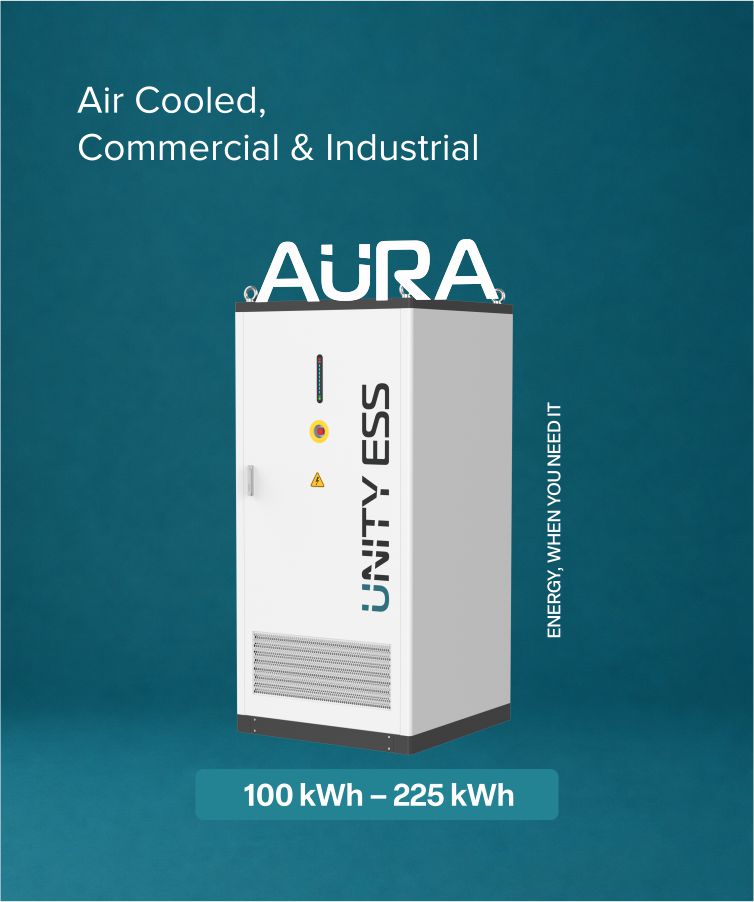
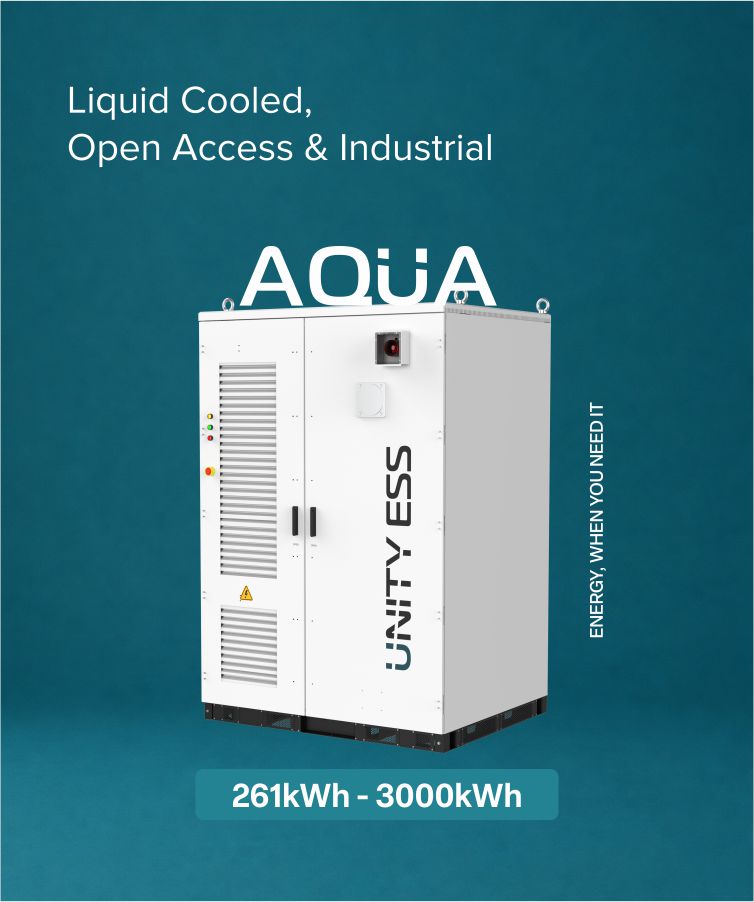
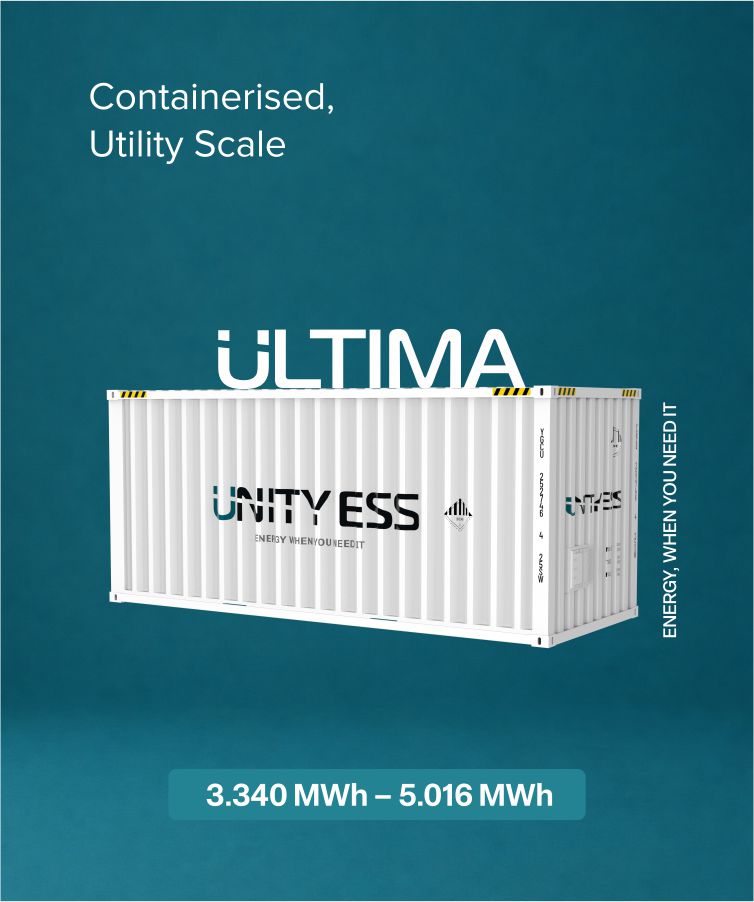
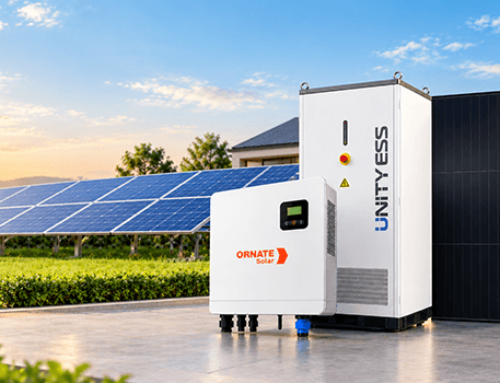
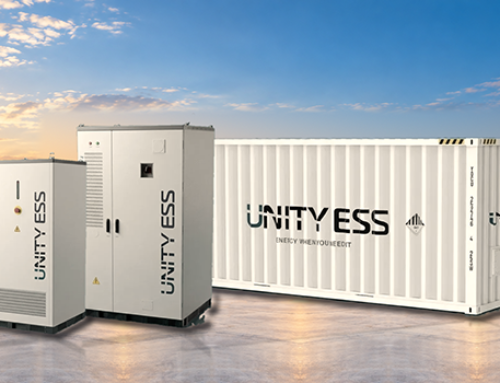
UnityESS is the battery energy storage brand from Ornate Solar and Inverted Energy, with systems for commercial, industrial and utility applications, including the UnityESS Aura outdoor cabinet and the UnityESS Ultima 20-foot container for utility-scale sites. Ornate Solar also supplies solar modules and inverters from partner brands. If you are planning a solar or storage project in Gujarat, our team can help you size BESS against the draft policy’s requirements and compare financing options.
About Ornate Solar
Ornate Solar is a leading solar company with 10 years of experience in the industry and a mission to reimagine the way solar is installed worldwide.
By not only partnering with the best-in-class solar brands but also developing our high-quality solutions (solar inverters, InRoof), we develop and deliver solutions that are modern, reliable, and effective. Ornate Solar is the official partner of Hopewind in India.
Ornate Solar is also a trusted BESS manufacturer in India. We have developed UnityESS, an advanced battery energy storage solution (bess) to provide reliable power and energy independence.
If you are planning a 1 MW solar plant, call us at 1800 2026 252 to discuss your options.





Leave A Comment